
A trend is worth considering only if it improves the way a space works. A colour that is popular for one season can be changed easily; a poor kitchen layout, insufficient storage or ill-considered lighting can remain an everyday problem for years.
We therefore approach 2026 as more than a list of must-have materials. Our focus is on calmer, more personal interiors, with less visual clutter and greater attention to comfort. The following ideas are useful when they respond to the home and its users, rather than becoming a checklist.
Function is guiding design decisions
The 2026 U.S. Houzz Kitchen Trends Study, based on responses from 1,780 U.S. homeowners, reports an increase in renovations prompted by deteriorating or poorly functioning kitchens. Local budgets and habits differ, but the practical lesson is relevant: a project should be judged by how well it works, not only by its photograph.
In practice, this means better preparation areas, accessible storage, sockets in the right places, quiet mechanisms and materials that can withstand daily use.
Warm neutrals gain depth through texture
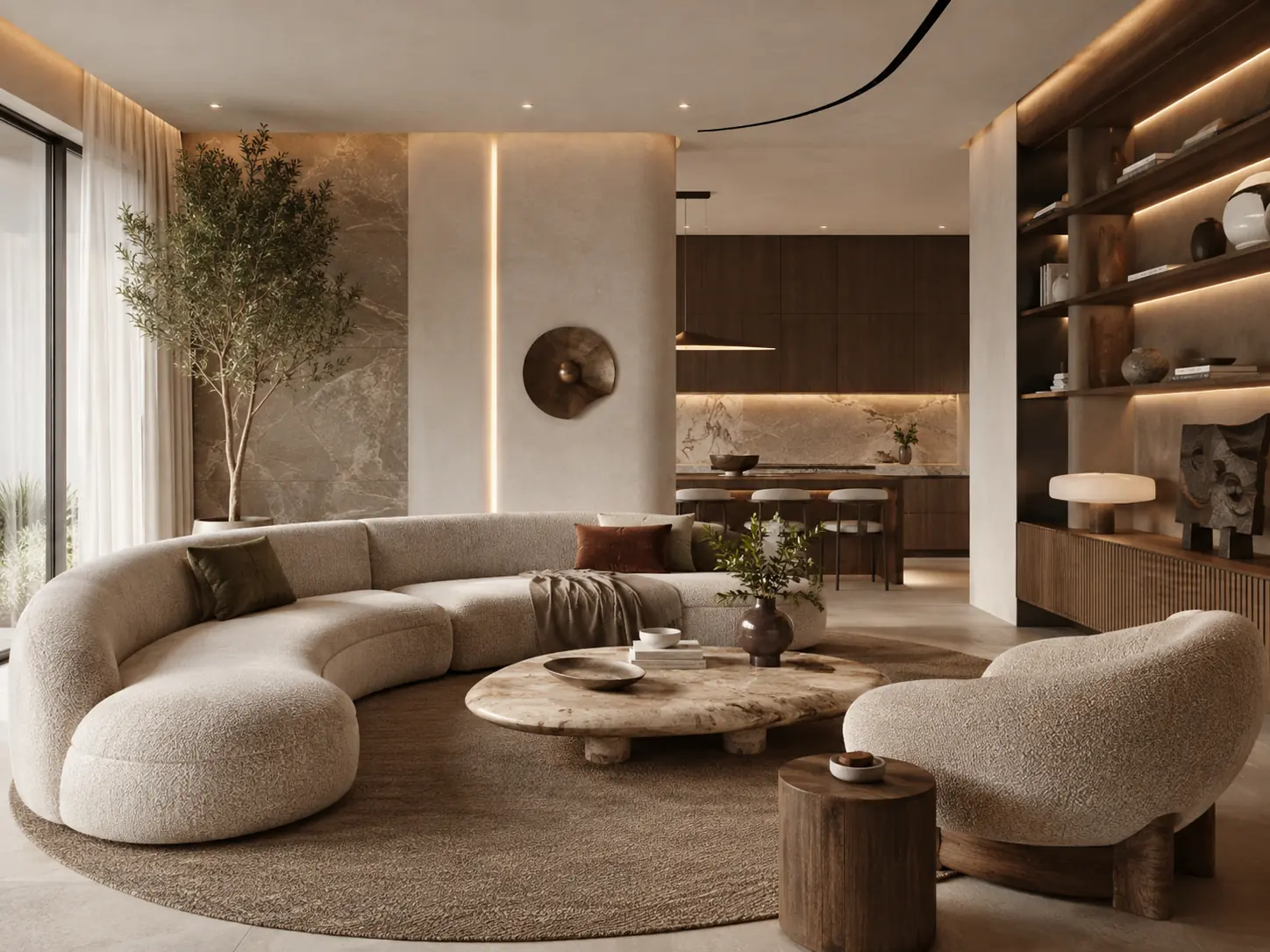
Beige, sand, warm grey and earthy tones provide a versatile foundation. Instead of relying on flat combinations, consider layered surfaces: visibly grained wood, stone, matt metals, textiles and mineral wall finishes. Texture can create depth even within a restrained palette.
A natural appearance does not require a collection of imitation finishes. One well-chosen material, carefully detailed and repeated in a few places, can be more convincing than five surfaces competing to become the main feature.
Storage and technology become less conspicuous
Integrated appliances, concealed pantries, flush doors and lighting built into architectural elements reduce visual clutter. Technology remains available without becoming the main subject of the interior. Switches, thermostats, speakers and shading systems should be planned alongside furniture and lighting.
Concealed should not mean inaccessible. Maintenance access, appliance ventilation and the eventual replacement of equipment must be resolved before an elegant enclosure is built.
Colour works best as a personal choice
Olive green, muted blue, terracotta, wine red and deeper wood tones offer alternatives to an entirely neutral interior. The most successful result is not a room copied from a trend palette, but a colour scheme connected to daylight, location and objects the owner already enjoys.
Colour can be concentrated on the kitchen, a bookcase, an entrance volume or the ceiling while the surrounding space stays calm. This gives the interior identity without making every surface compete for attention.
The kitchen should serve the household, not a showroom
Generous worktops, continuous splashbacks and well-lit preparation areas remain useful, but the layout should respond to the people using it. One household needs an island for gathering; another benefits more from a tall pantry or a table for everyday meals.
Instead of filling the room with open shelves, consider closed storage and one carefully designed niche. Continuing selected materials across larger surfaces can connect the kitchen visually with the living area.
Wellness starts with light, air and acoustics
A wellness-focused interior does not have to include a home spa. It can begin with good daylight, effective blackout options, ventilation, glare control and a quieter place to rest. In a bedroom, considered lighting and acoustics may offer more value than another decorative feature wall.
In bathrooms, this approach can include low-threshold showers, slip-resistant floors, seating, well-positioned lighting and surfaces that are straightforward to maintain.
The connection with the terrace needs careful design
Opening a room to the terrace involves more than installing large panes of glass. Shade, drainage, privacy, wind protection and climate-appropriate furniture all matter. For further context on outdoor renovation priorities, see the 2026 U.S. Houzz Outdoor Trends Study. Its U.S. context should be considered when applying ideas to Montenegro.
What is unlikely to age well?
Too many short-lived trends in one room, materials chosen only from a rendering, details that cannot be reliably constructed and smart systems without simple manual controls can all make a home harder to live with. A timeless space is not a space without character; it is one whose main idea does not depend on a single fashionable product.
To turn current ideas into a solution suited to your own space, explore our interior design process or send your brief through Request a quote.